
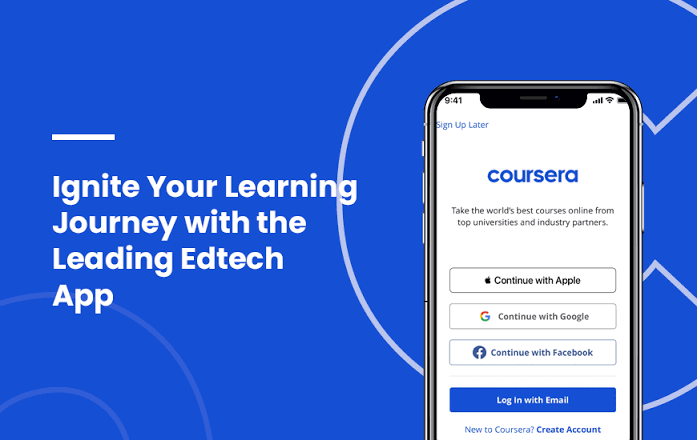
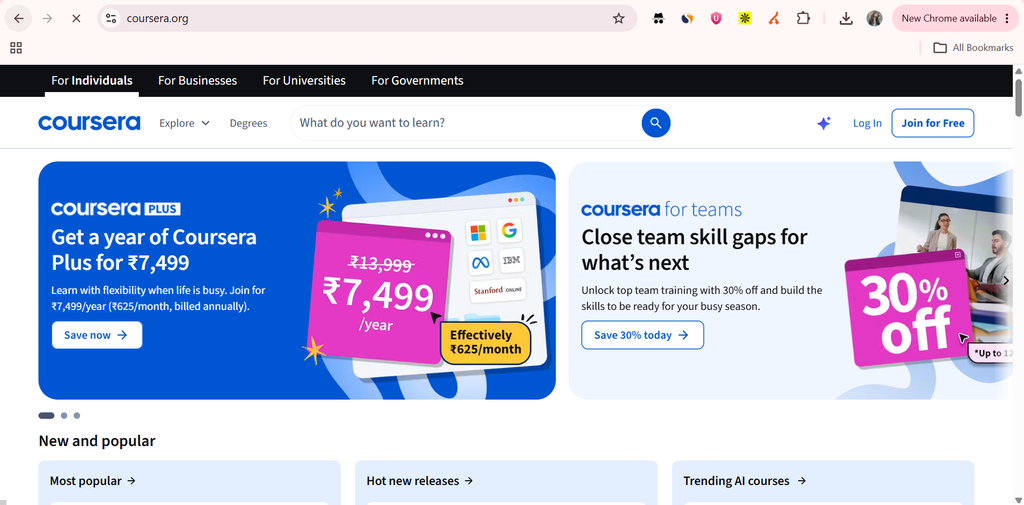
Learning is no longer limited to classrooms, textbooks, or fixed academic schedules. A person can now learn a professional skill during a lunch break, take a course after work, or explore an unfamiliar subject simply out of curiosity. This change has made online learning a regular part of how people build knowledge. Coursera has become one of the platforms associated with this shift. Rather than focusing on one particular subject, it brings learning material from different universities, companies, and educators into a single platform. This makes it possible to move between subjects, explore new interests, and develop skills without following one traditional education path.
More Than Just an Online Course
It is easy to think of Coursera as a website where people watch educational videos. In practice, the learning experience can be more structured than that. Depending on the program, learners may encounter video lessons, reading material, quizzes, assignments, peer-reviewed work, and practical projects. The platform includes short courses as well as longer learning programs. This variety matters because not everyone approaches education with the same purpose. One person might want a quick introduction to a subject, while another may want to spend several months developing a more complete understanding. Having both options allows learners to choose an approach that fits their available time and personal objectives.
A Wide Choice of Subjects
One of the noticeable aspects of Coursera is the range of subjects available. Someone interested in technology can explore programming, cloud computing, artificial intelligence, or cybersecurity. Another learner might be more interested in business, finance, communication, psychology, design, or digital marketing. This variety can also encourage people to explore subjects outside their original career plans. A marketing professional, for example, may decide to learn data analysis to understand campaign performance better. Similarly, a business student could study project management or presentation skills to become more confident in a professional environment. The ability to combine different areas of knowledge can be useful when career roles increasingly require people to work across multiple disciplines.
Learning Around a Busy Schedule
Time is often the biggest challenge for people who want to learn something new. Full-time employees may not be able to attend regular classes, while students already have academic responsibilities to manage. Online learning offers a different arrangement. Lessons can generally be accessed from a personal device, allowing learners to decide when they want to study. This does not make the process effortless. A flexible course still requires discipline, particularly when there are assignments or longer programs involved. Setting aside a few hours each week can make learning more manageable. Instead of waiting for a large block of free time, learners can make gradual progress by treating education as a regular part of their routine.
Learning With a Career in Mind
For many people, the decision to take an online course is connected to their professional future. They may want to strengthen an existing skill, understand a new area of work, or prepare for a possible career transition. Coursera offers courses and professional programs that can support these goals. However, an online certificate should not be treated as a guaranteed route to employment. Employers usually look at the bigger picture. Practical experience, problem-solving ability, communication, previous work, and the ability to apply knowledge can all matter. This is why learners can benefit from turning their coursework into something tangible. A marketing learner could develop a campaign plan, while a data learner could create a project using a real dataset. Such work can make newly acquired knowledge easier to demonstrate.
Choosing the Right Learning Path
Having a large number of courses available can be helpful, but it can also make the selection process confusing. The most popular course is not necessarily the right one for every learner. Before starting, it is worth looking at the syllabus, difficulty level, estimated study time, assignments, and skills covered. A beginner may benefit from building basic knowledge first instead of immediately choosing an advanced program. Someone with professional experience may prefer a specialised course that addresses a specific gap in their knowledge. It is also useful to consider the reason behind taking the course. Learning without a clear objective can make it easier to lose motivation. A simple goal, such as learning a particular tool or understanding a specific business concept, can give the study process more direction.
Where Coursera Fits Into Modern Education
Online platforms are unlikely to replace every form of traditional education, and they do not need to. Their value often comes from giving people another way to learn. A university degree may provide years of structured education, while an online course can help someone quickly explore a new topic or update an existing skill. Coursera fits into this broader learning environment by giving users access to educational content from a range of institutions and organisations. Its usefulness ultimately depends on how the learner approaches it. Watching lessons passively may provide information, but practising, taking notes, completing projects, and revisiting difficult concepts can create a much stronger learning experience.
Conclusion
The strongest reason to consider Coursera is not simply the number of courses available. It is the flexibility to decide what to learn and how that learning can fit into a larger personal or professional plan. For a student, it can be a way to explore an area beyond the regular curriculum. For a working professional, it can provide an opportunity to refresh or expand existing knowledge. For someone considering a career change, it can offer a low-risk way to investigate a new field before making a larger commitment. Like any form of education, however, its value depends on what happens after the lessons are completed. When new knowledge is combined with practice, projects, and real experience, online learning can become more than another certificate on a profile. It can become part of a person’s long-term approach to learning and professional growth.