

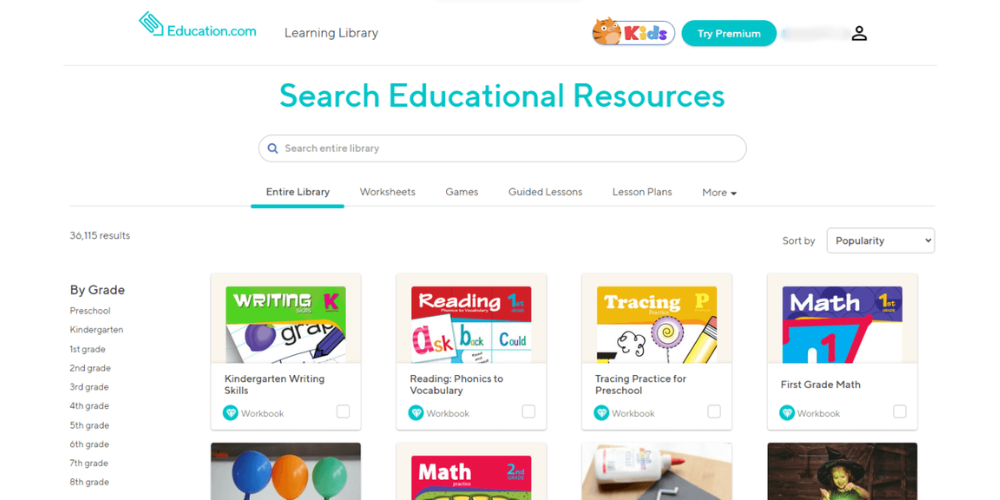
Learning can become more effective when children have access to resources that match their interests, abilities, and individual pace. Education.com offers a broad collection of educational materials designed to make practice more approachable and enjoyable. Its resources cover areas such as mathematics, reading, writing, science, and other foundational subjects, giving learners different ways to explore important concepts. Educational activities can be particularly useful when they complement classroom lessons and encourage children to practice independently. Parents and teachers can introduce supplementary exercises according to a child’s needs instead of following the same approach for every learner. By combining structured practice with engaging activities, Education.com can become a useful addition to everyday learning routines at home or in educational settings.
Supporting Children Through Varied Learning Activities
Children often respond differently to various learning methods, which makes variety an important part of education. Some learners enjoy solving problems, while others prefer visual activities, games, or hands-on exercises. Education.com provides different types of resources that can help accommodate these preferences. Worksheets can reinforce lessons through repetition, while games and interactive activities may make practice feel more enjoyable. This variety can also help parents avoid creating repetitive study sessions that children may quickly lose interest in. Teachers can similarly introduce different activities when they want to reinforce a concept from another perspective. Providing multiple approaches does not guarantee that every activity will suit every child, but it gives adults more opportunities to discover which learning formats work best.
Building Strong Foundations Through Practice
Regular practice plays an important role in helping children develop confidence with essential academic skills. Concepts introduced in school may require additional repetition before they become familiar, particularly when a child finds a subject challenging. Supplementary educational resources can provide opportunities to revisit these concepts without making every study session feel identical. Education.com includes materials that can support practice across different academic areas and learning stages. Parents can select activities that correspond with current lessons, while teachers can use additional resources to reinforce classroom instruction. Consistent practice can help children recognize patterns, correct mistakes, and become more comfortable applying what they have learned. When practice is balanced with encouragement, it can become a positive part of a child’s regular learning experience.
Making Home Education More Convenient

Home learning often requires parents to balance educational activities with work, household responsibilities, and other commitments. Having accessible learning resources can make that process easier by reducing the amount of preparation required for every activity. Education.com provides materials that parents can incorporate into existing routines, whether they want short practice sessions or more structured activities. Resources can be selected according to subjects, skills, and learning levels, allowing families to create activities that fit their circumstances. This flexibility can be useful during weekends, school breaks, or after-school practice. However, effective home learning is not simply about providing worksheets or activities. Children generally benefit more when parents remain involved, explain difficult concepts, and encourage questions throughout the learning process.
Helping Teachers Create Flexible Learning Experiences
Teachers regularly work with classrooms where students have different strengths, challenges, and learning preferences. Supplementary resources can provide additional options when a standard lesson does not meet everyone’s needs. Education.com can serve as a source of activities that teachers may incorporate into classroom practice, homework, or revision sessions. Having access to different formats can make it easier to vary lessons and provide students with additional opportunities to work on specific skills. Educational resources can also help teachers introduce extra practice without having to design every activity from the beginning. The most effective use depends on thoughtful selection, since an activity should support the learning objective rather than simply fill classroom time. Used strategically, supplementary materials can add flexibility to teaching.
Encouraging Independent Learning Habits Over Time
Developing independent learning habits can help children become more confident as they progress through school. Educational activities can encourage learners to attempt problems, read instructions, evaluate answers, and recognize areas where they need additional practice. Resources from Education.com can be incorporated into routines where children gradually take greater responsibility for completing suitable activities. Younger learners may need more parental guidance, while older children can often work through selected exercises with greater independence. The goal is not simply to complete as many worksheets as possible, but to develop curiosity and a willingness to keep learning. When children understand that mistakes are part of the process, they may become more comfortable tackling unfamiliar topics and seeking help when necessary.
Conclusion: Making Learning More Accessible Daily
Education.com represents one approach to supporting children’s education through accessible and varied learning resources. Its collection can complement classroom teaching by providing additional opportunities to practice academic skills, explore subjects, and develop familiarity with important concepts. Parents may find supplementary materials useful for home routines, while teachers can use selected activities to add variety to lessons. The value of any educational resource ultimately depends on how appropriately it is matched with a child’s age, abilities, interests, and learning goals. Educational platforms work best when combined with guidance, encouragement, and meaningful interaction rather than being treated as a complete substitute for teaching. With thoughtful use, resources such as Education.com can help make everyday learning more flexible, engaging, and manageable.