


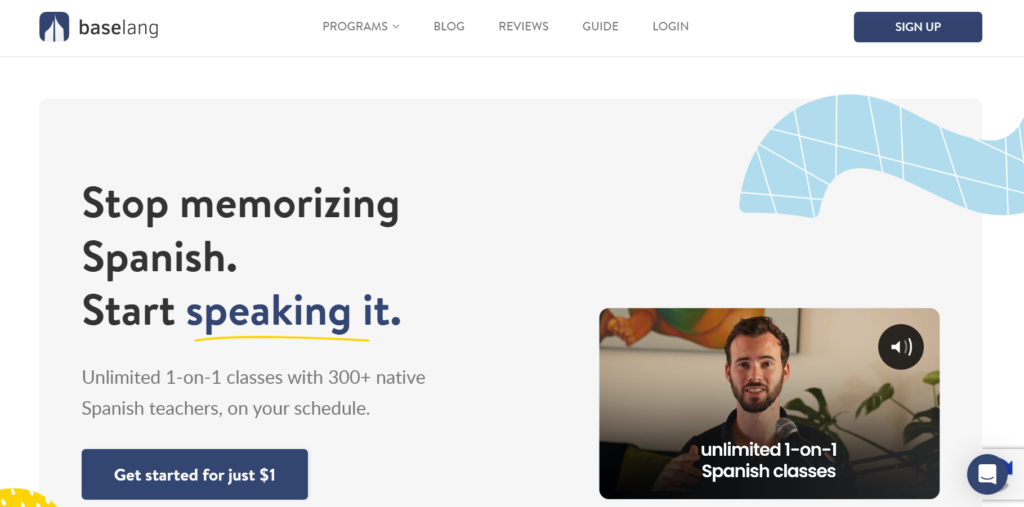
Learning Spanish can be challenging when traditional courses feel slow, expensive, or difficult to fit into a busy schedule. BaseLang offers a different approach by focusing heavily on live, one-on-one Spanish instruction. The platform is designed for learners who want regular speaking practice and direct interaction with teachers rather than relying mainly on recorded lessons or independent exercises. Its structure can appeal to beginners as well as learners who already understand some Spanish but want to become more confident using it. From flexible scheduling to personalized lessons, BaseLang creates an experience centered around active participation. However, whether it is the right choice depends on a learner’s goals, preferred study style, consistency, and willingness to practice regularly.
Live Lessons Make Learning More Interactive
One of BaseLang’s strongest features is its emphasis on live instruction. Instead of spending most of the course watching prerecorded videos, students can communicate directly with Spanish teachers during lessons. This format provides opportunities to practice pronunciation, vocabulary, sentence construction, and conversational skills in real time. For many learners, speaking regularly is one of the hardest parts of language learning, so immediate interaction can be particularly useful. Students can also ask questions when they encounter confusing grammar or unfamiliar expressions. The experience feels more like participating in an actual language class than simply completing digital exercises. Learners who enjoy conversation and personal guidance may find this approach more engaging than studying entirely through self-paced material.
Flexible Scheduling Supports Consistent Spanish Practice
Finding time for language lessons can be difficult, especially for people balancing work, education, travel, or family responsibilities. BaseLang places considerable emphasis on flexibility, allowing learners to arrange lessons around their own availability. This can make regular Spanish practice easier to maintain than a traditional class with a fixed weekly timetable. Flexible scheduling is particularly valuable for students who prefer studying at different times throughout the week. It also makes the platform potentially convenient for people whose schedules change frequently. However, flexibility works best when learners create their own routine. Having access to lessons does not automatically guarantee progress. Students still need to set aside consistent study time, attend lessons regularly, and actively participate if they want to develop stronger Spanish skills.
One-On-One Classes Offer Personalized Attention
Personalized instruction can make a significant difference when learning a language, and BaseLang’s individual lesson format gives students direct access to their teacher. In a one-on-one setting, learners can spend more time working on areas where they struggle instead of following the exact pace of a large classroom. Someone having difficulty with pronunciation can dedicate additional practice to speaking, while another learner might focus more heavily on grammar or everyday conversation. This individualized structure may also make lessons feel less intimidating for students who are uncomfortable speaking Spanish around other classmates. At the same time, the quality of a learning experience can depend on the teacher and the student’s own participation. Learners should remain active, ask questions, and communicate their goals clearly.
BaseLang Can Suit Different Learner Goals
Another appealing aspect of BaseLang is that students can approach their lessons according to their individual objectives. Some people may want Spanish for travel, while others could be learning for work, personal communication, relocation, or general interest. A learner who already knows basic Spanish may want to concentrate on conversational fluency, whereas a beginner might need to build fundamental vocabulary and grammar first. Live lessons provide room for these different priorities because students can communicate what they want to practice. This makes the platform potentially useful across several stages of learning. Nevertheless, BaseLang should not be viewed as a shortcut to fluency. Language development requires repeated exposure, independent practice, vocabulary building, listening, and continued effort outside scheduled lessons.
The Learning Experience Has Some Limitations
While BaseLang has several advantages, it may not suit every type of learner. People who prefer structured textbooks, extensive written assignments, or highly organized self-paced courses may find a conversation-focused model less appealing. Likewise, learners who rarely have time for live lessons may struggle to take full advantage of the platform. The interactive format also requires students to participate rather than passively consume content. Another consideration is that progress can vary significantly depending on consistency, teacher compatibility, previous Spanish knowledge, and individual learning habits. Students expecting immediate fluency may become disappointed if they do not practice beyond their lessons. BaseLang is therefore best considered as a practical learning resource rather than a replacement for personal effort and broader Spanish exposure.
Is BaseLang Worth Trying For Spanish?

For learners who prioritize speaking practice and personalized interaction, BaseLang can be an appealing alternative to conventional online language programs. Its live lesson approach provides frequent opportunities to communicate with teachers and work through Spanish in a practical environment. Flexible scheduling can also make regular study easier for people with unpredictable routines. The platform is particularly worth considering for students who learn best through conversation and direct feedback. On the other hand, those who prefer independent study materials, fixed coursework, or minimal live interaction may want to explore other options. Ultimately, the value of BaseLang depends on how consistently a student uses its lessons and whether its teaching style matches their preferred way of learning.
Conclusion: BaseLang Review Final Verdict

BaseLang offers a distinctive approach to Spanish learning by putting live communication and personalized instruction at the center of the experience. Its flexible lesson structure can make regular practice more convenient, while one-on-one sessions allow learners to focus on their individual weaknesses and objectives. These qualities make it especially interesting for people who want to become more comfortable speaking Spanish rather than simply completing theoretical coursework. However, the platform is not a magic solution, and meaningful progress still requires dedication, repetition, and practice outside lessons. Overall, BaseLang can be a strong option for learners seeking an interactive and flexible Spanish-learning experience. Those who value real conversation and personalized guidance may find it particularly worthwhile.